Targeted Treatment to Support Pain Relief, Recovery, and a Return to Activity

Shockwave therapy is a noninvasive treatment that uses acoustic energy to stimulate an injured or painful area. At One on One Physical Therapy, shockwave therapy may be incorporated into an individualized rehabilitation program to help address persistent tendon, fascia, muscle, and other musculoskeletal conditions.

Shockwave therapy is not used as a stand-alone solution or a one-size-fits-all treatment. Our physical therapists first perform a comprehensive evaluation to understand your symptoms, movement, strength, mobility, activity demands, and goals. When shockwave therapy is appropriate, we combine it with the exercises, education, hands-on treatment, and progressive loading needed to create meaningful and lasting improvement.
Optimizing Athletic Performance with VALD Testing in Physical Therapy

What Is Shockwave Therapy?

Shockwave therapy, also known as extracorporeal shockwave therapy, delivers controlled acoustic waves through the skin to a targeted area of the body.
These acoustic waves create mechanical stimulation within the treated tissue. This stimulation may help:

  • Decrease pain
  • Improve local circulation
  • Support the body’s natural healing response
  • Improve tolerance to movement and loading
  • Assist rehabilitation of persistent musculoskeletal conditions

Treatment does not involve an incision, injection, or medication. Most sessions take only a few minutes, allowing shockwave therapy to be incorporated efficiently into a comprehensive physical therapy plan.

Why We Chose Focused Shockwave Therapy

Not all shockwave therapy is the same.

Two common forms used in musculoskeletal care are radial pressure wave therapy and focused shockwave therapy. While both can be useful treatment options, they deliver energy to the body differently.

Radial Pressure Wave Therapy

Radial pressure wave therapy delivers its greatest amount of energy near the surface of the body and disperses that energy over a broader area as it travels into the tissue.

This can make it useful when treating larger or more superficial areas.

Focused Shockwave Therapy

Focused shockwave therapy concentrates acoustic energy at a specific depth within the tissue.

This allows the clinician to more precisely target specific structures, including tissues located deeper beneath the skin.

At One on One Physical Therapy, we chose to invest in focused shockwave technology because it gives our therapists greater control over where energy is delivered and allows for more precise treatment of selected tissues.

That precision fits the way we already practice: individualized treatment based on a detailed examination rather than applying the same treatment to every patient.

Radial vs. Focused Shockwave at a Glance

Radial Pressure Wave

  • Energy is greatest near the skin surface
  • Energy disperses across a broader area
  • Often used for more superficial treatment areas
  • Produces a radial pressure wave
  • Useful for selected musculoskeletal conditions

Focused Shockwave

  • Energy can be concentrated at a selected depth
  • Energy is delivered to a more defined target
  • Can target both superficial and deeper structures
  • Produces a focused acoustic shockwave
  • Allows more precise treatment of selected tissues

Focused shockwave is not automatically the right treatment for every condition. Our physical therapists determine whether shockwave is appropriate, identify the specific structure being treated, select treatment parameters, and integrate treatment with the exercise and loading program necessary for long-term recovery.

Conditions That May Benefit from Shockwave Therapy

Shockwave therapy is most commonly used for persistent conditions that have not fully responded to rest, activity modification, exercise, or other conservative treatments.

Depending on your examination and medical history, shockwave therapy may be considered for conditions such as:

  • Plantar fasciitis and persistent heel pain
  • Achilles tendinopathy
  • Patellar tendinopathy
  • Proximal hamstring tendinopathy
  • Gluteal tendinopathy and greater trochanteric pain
  • Tennis elbow and golfer’s elbow
  • Rotator cuff tendinopathy
  • Calcific rotator cuff tendinopathy
  • Other persistent tendon or soft-tissue conditions

Not every painful condition should be treated with shockwave therapy. Your physical therapist will determine whether it is appropriate based on your diagnosis, symptoms, health history, stage of recovery, and treatment goals.

What Does Shockwave Therapy Feel Like?

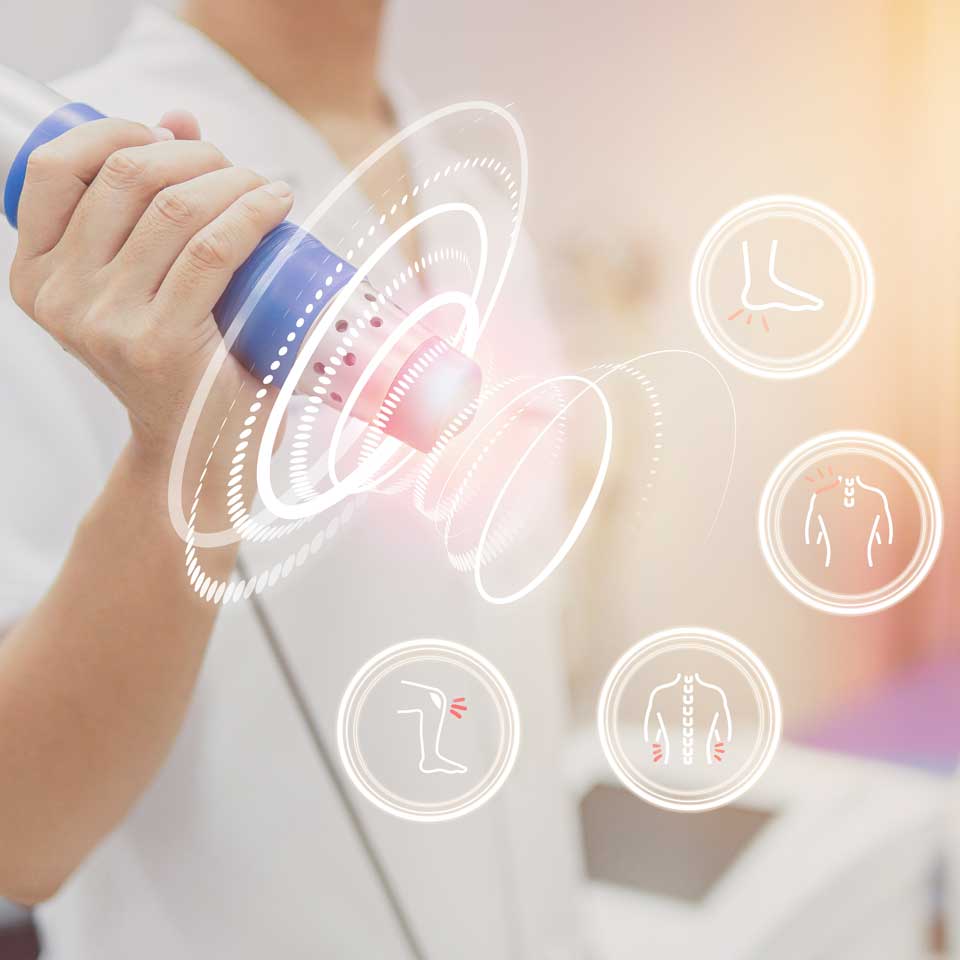
During treatment, your physical therapist applies a handheld treatment head over the targeted area. You will feel a series of rapid pulses as the acoustic energy is delivered.

Treatment intensity is adjusted according to the area being treated and your tolerance. Some discomfort is common, particularly when treating a sensitive tendon or soft-tissue structure, but treatment should remain manageable.

Communication with your therapist throughout the session allows the intensity to be modified when needed.

Temporary soreness, redness, or sensitivity may occur following treatment. Your therapist will explain what to expect and provide guidance regarding exercise and activity after your session.

How Many Treatments Will I Need?

The number and frequency of treatments vary according to the condition, symptom duration, treatment area, and individual response.

Shockwave therapy is commonly delivered over a series of appointments rather than as a single treatment. Improvement may develop gradually as the body responds to treatment and becomes better able to tolerate progressive activity.

Your physical therapist will monitor your response and adjust your treatment plan accordingly.

We do not recommend continuing a treatment simply because it is available. Shockwave therapy will only remain part of your program when it is appropriate and helping you progress toward your goals.

An Optional Addition to Your Rehabilitation Plan

Shockwave therapy may help decrease symptoms and create an opportunity for the affected tissue to tolerate more activity. However, lasting recovery usually requires more than treating the painful area.

Your rehabilitation program may also include:

  • Progressive tendon or muscle loading
  • Strength and mobility exercises
  • Movement and biomechanical assessment
  • Activity and training modifications
  • Manual therapy
  • Neuromuscular reeducation
  • Sport- or activity-specific preparation
  • Education for managing symptoms and preventing recurrence

Our goal is not simply to make an area feel better temporarily.

We want to help you restore function, rebuild physical capacity, and confidently return to the activities that matter to you.

Shockwave Therapy Works Best as Part of a Complete Rehabilitation Plan

Shockwave therapy is available as an optional cash-pay service in addition to your physical therapy treatment.

Because shockwave therapy is not covered by insurance, it is billed separately from your physical therapy appointment.

We understand that our patients are already making a significant investment in their care. For that reason, we recommend shockwave selectively and only when we believe there is a clear clinical reason to consider it.

Your physical therapist may discuss shockwave with you when:

  • Your symptoms have been present for an extended period
  • A tendon or soft-tissue condition is limiting your ability to progress
  • Pain continues to interfere with exercise or activity
  • Your recovery has reached a plateau
  • You are looking for an additional conservative treatment option

Shockwave is not required for every patient, and choosing not to add shockwave will not affect the quality of your physical therapy care.

Why Is There a Separate Fee?

Shockwave therapy is not covered by most insurance plans and is not included in the cost of a standard physical therapy session.

The service requires specialized technology, additional treatment time, and condition-specific clinical decision-making.

The fee includes more than simply applying a machine to a painful area. Your physical therapist will:

  • Determine whether shockwave is appropriate for your condition
  • Identify the specific tissue and treatment area
  • Select and adjust treatment settings based on your presentation
  • Monitor your response during and after treatment
  • Coordinate shockwave with your exercise and loading program
  • Reassess whether the treatment is helping you make meaningful progress

Our goal is to use shockwave selectively and strategically, not simply because the technology is available.

The One on One Difference

Personalized Clinical Decision-Making

Shockwave therapy is selected based on your individual examination, not simply because you have pain in a particular location.

Your therapist will evaluate the possible source of your symptoms and determine whether shockwave therapy is an appropriate option.

Focused Technology

We chose focused shockwave technology because it allows greater precision in targeting specific tissues and treatment depths.

The technology gives our therapists another advanced tool that can be matched to the individual patient and condition.

Private, One-on-One Treatment

At One on One Physical Therapy, you receive the undivided attention of your physical therapist.

This allows us to carefully monitor your response, adjust treatment intensity, and integrate shockwave therapy into a program designed specifically for you.

Expert Physical Therapists

Our therapists pursue advanced education and remain current with research and developments in musculoskeletal rehabilitation.

We use technology to support, not replace, clinical expertise, thoughtful evaluation, and individualized care.

A Complete Approach to Recovery

One on One offers a continuum of care extending from pain relief and rehabilitation to injury prevention, fitness, and performance.

Shockwave therapy is one of many advanced tools we can use to help you move well, live well, and stay well.

Frequently Asked Questions

Is shockwave therapy the same as electrical stimulation?

No. Shockwave therapy uses acoustic or pressure waves rather than electrical current.

It is different from TENS, neuromuscular electrical stimulation, and therapeutic ultrasound.

What is the difference between radial and focused shockwave?

Radial pressure wave therapy delivers its greatest energy near the surface and spreads that energy over a broader treatment area.

Focused shockwave concentrates energy at a selected depth, allowing for more precise targeting of specific tissues.

Is focused shockwave better than radial shockwave?

Not necessarily for every condition.

The two technologies deliver energy differently and may have different clinical applications. We chose focused shockwave because of its ability to target specific structures and treatment depths, but your therapist will still determine whether shockwave itself is appropriate for your condition.

Is shockwave therapy invasive?

No. Shockwave therapy is applied through the skin and does not require an incision or injection.

Is shockwave therapy painful?

You may experience some discomfort while a sensitive area is being treated.

Your therapist can adjust the treatment intensity to keep the session tolerable.

Can I exercise after shockwave therapy?

Many patients can continue appropriate exercise during a course of shockwave therapy.

Your therapist will provide individualized instructions based on your condition, treatment intensity, symptoms, and rehabilitation plan.

Will shockwave therapy replace my exercises?

No.

Shockwave therapy is generally most useful when combined with an appropriate rehabilitation and loading program. Exercise helps restore the strength, mobility, and physical capacity needed for lasting recovery.

How quickly will I notice improvement?

Responses vary.

Some patients notice an early change in symptoms, while others improve more gradually over several weeks.

Your therapist will monitor changes in pain, function, strength, and activity tolerance rather than relying only on how the area feels immediately after treatment.

Is shockwave therapy covered by insurance?

Shockwave therapy is typically not covered by insurance and is offered as a separate cash-pay service.

Your therapist will explain the cost before treatment, and there is no obligation to proceed.

Is shockwave therapy right for everyone?

No.

Certain medical conditions, medications, treatment locations, and stages of healing may make shockwave therapy inappropriate.

Your physical therapist will review your health history and screen for relevant precautions before treatment.

Get Started with Performance Physical Therapy Today

Contact our Atlanta physical therapy office today for more information and to schedule your initial consultation.