Pairing PRP and Shockwave Therapy: Can Two Regenerative Treatments Work Better Together?
For people dealing with persistent tendon pain, treatment can become frustrating. Exercise remains a cornerstone of care, but some tendon conditions continue to limit activity despite months of appropriate rehabilitation.
Two treatments that have become increasingly common in sports medicine are platelet-rich plasma (PRP) and extracorporeal shockwave therapy (ESWT). Each has been studied independently, but researchers are increasingly asking:
Could combining PRP and shockwave produce better results than using either treatment alone?
Early research suggests that for certain tendon conditions, the answer may be yes.
What Do PRP and Shockwave Actually Do?
PRP involves concentrating platelets from a patient’s own blood and injecting them into an injured or degenerative area. These platelets contain signaling molecules and growth factors involved in tissue repair and cellular communication.
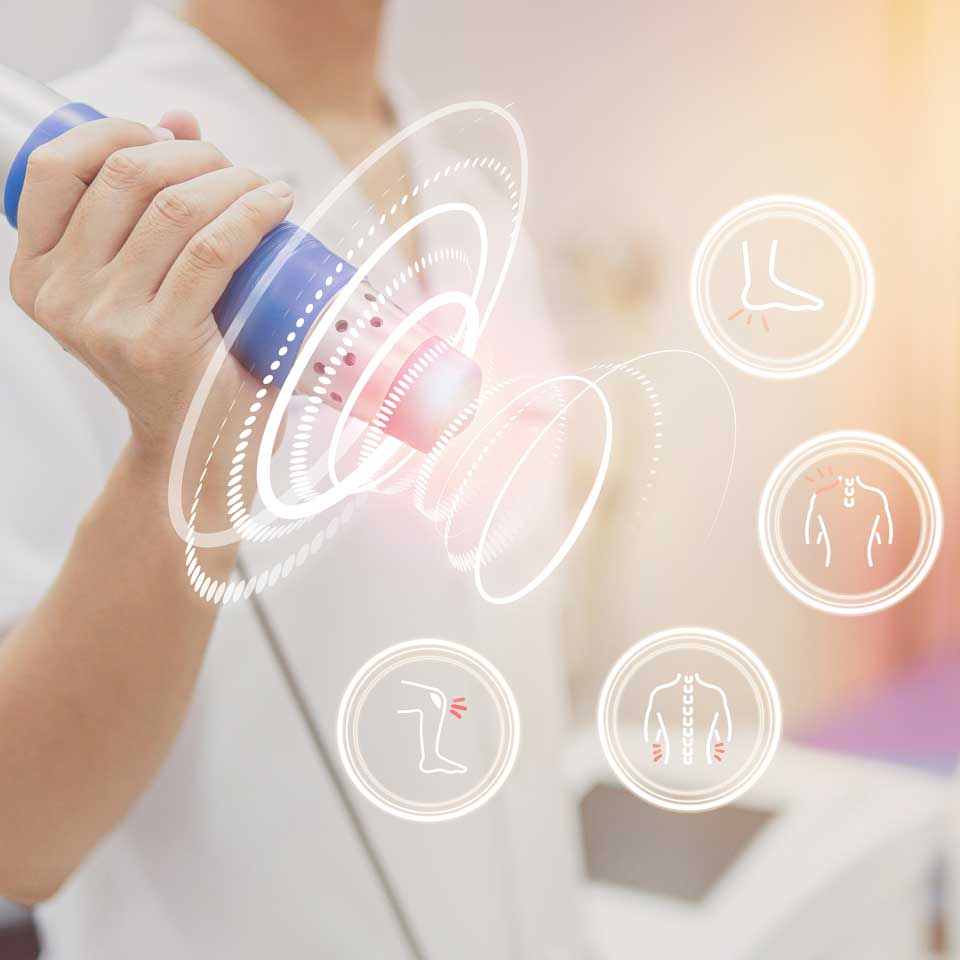
Shockwave therapy delivers acoustic energy into targeted tissue. Rather than simply “breaking up scar tissue,” shockwave appears to influence cellular signaling, blood vessel formation, tissue remodeling, and pain through a process known as mechanotransduction.
Because the two treatments provide different types of stimulation, researchers have proposed that combining them may create a more favorable environment for tendon recovery.
What Does the Research Show?
A 2024 randomized controlled trial studied athletes with chronic patellar tendinopathy (often called jumper’s knee). Participants received either PRP alone or PRP followed by shockwave therapy. Both groups improved, but the PRP plus shockwave group experienced faster pain reduction at the one-month follow-up.[1]
A 2025 randomized trial examined people with chronic lateral epicondylitis, commonly known as tennis elbow. Participants completed therapeutic exercise while receiving different combinations of PRP and shockwave. The group receiving PRP, shockwave, and exercise demonstrated greater improvements in pain and several measures of upper-extremity function.[2]
A small 2026 study of athletes with persistent patellar tendinopathy compared PRP alone, shockwave alone, and a combination of the two alongside rehabilitation. The authors described the combined approach as “bio-mechano-therapy”, pairing a biological stimulus from PRP with the mechanical stimulus of shockwave. The combination group showed promising structural and symptom improvements, although the study was very small and larger trials are needed.[3]
Does the Order of PRP and Shockwave Matter?
This is an important question, and the research is still developing.
In the 2024 patellar tendinopathy trial, the sequence was:
PRP first → shockwave one week later.[1]
That study used a single PRP injection followed by one shockwave treatment and found faster early pain improvement than PRP alone.
Other studies have used the treatments together over several weeks. The 2026 patellar tendon study used three PRP treatments at two-week intervals while also providing three weekly shockwave sessions.[3] In the lateral epicondylitis study, researchers combined a single PRP injection with three weekly radial shockwave sessions and exercise.[2]
What has not yet been established is whether shockwave should routinely be performed before PRP, immediately afterward, or at one specific interval. There is also not enough evidence to say that a “shockwave → PRP → shockwave” sequence is superior.
For the time being, the research supports the idea that PRP and shockwave may be complementary treatments that can be strategically spaced during rehabilitation, but the ideal order and dosage are still being studied.
Why Might the Combination Make Sense?
Chronic tendinopathy is not simply an inflammatory problem. It involves changes in tendon structure, cellular behavior, mechanical capacity, and tolerance to load.
A simple way to think about the combination is:
- PRP → biological stimulus
- Shockwave → mechanical and biological stimulus
- Exercise → progressive functional stimulus
PRP may provide signaling intended to support tissue repair. Shockwave may provide a mechanical stimulus that influences cellular activity and remodeling. Exercise then progressively challenges the tendon so it can regain strength and tolerate real-world demands.
The goal is not for any one treatment to “heal” the tendon by itself. The concept is that several complementary interventions may help create better conditions for adaptation.
Does Everyone With Tendon Pain Need PRP and Shockwave?
No.
Exercise remains one of the most consistently supported treatments for tendinopathy. A systematic review of systematic reviews found exercise to have the strongest and most consistent evidence across tendon conditions, while shockwave demonstrated moderate effectiveness and evidence for PRP remained more variable.[4]
PRP and shockwave are therefore better viewed as adjuncts to rehabilitation, rather than replacements for it.
They may be considered when symptoms persist despite appropriate rehabilitation, activity remains significantly limited, or progress has plateaued.
The specific tendon also matters. Evidence from patellar tendinopathy or lateral epicondylitis cannot automatically be applied to the Achilles tendon, rotator cuff, plantar fascia, or every other musculoskeletal condition.
The Role of Physical Therapy
Even when PRP or shockwave is used, progressive rehabilitation remains essential.
Physical therapy can help rebuild:
- Tendon strength and loading capacity
- Mobility
- Power
- Running or jumping tolerance
- Sport-specific demands
- Confidence returning to activity
Rehabilitation should also be coordinated with the treating physician so that loading progression matches the procedure, involved tissue, and individual patient.
Where the Research Is Headed
The emerging research on combining PRP and shockwave reflects a broader shift in musculoskeletal medicine.
Rather than searching for one treatment that “fixes” a tendon, clinicians are increasingly studying how biologic treatments, mechanical therapies, and progressive rehabilitation may complement one another.
Current evidence suggests that pairing PRP with shockwave may improve or accelerate outcomes in selected patients with chronic tendinopathy, particularly in patellar tendinopathy and lateral epicondylitis.[1–3]
This said, important questions remain: Which patients benefit most? Which tendon conditions respond best? How many treatments are needed? And what is the ideal timing between PRP and shockwave?
The most promising approach may not be choosing between PRP, shockwave, and exercise, but understanding how they can be strategically combined as part of an individualized rehabilitation plan.
Considering Shockwave Therapy in Atlanta?
If tendon pain has not settled with exercise alone, or you have had PRP and want a rehabilitation plan built around it, we can help you sort out what makes sense for your tendon. Learn more about shockwave therapy at One on One Physical Therapy, or schedule an evaluation.
William Knight, PT, DPT, CSCS is a physical therapist at One on One Physical Therapy in Atlanta.
References
- Jhan SW, Wu KT, Chou WY, et al. A comparative analysis of platelet-rich plasma alone versus combined with extracorporeal shockwave therapy in athletes with patellar tendinopathy and knee pain: a randomized controlled trial. Knee Surgery & Related Research. 2024;36(1):47. PMID: 39690426.
- Akçin AI, Eyvaz N, Dündar Ü, et al. The clinical efficacy of extracorporeal shock wave therapy combined with platelet-rich plasma and exercise for lateral epicondylitis: prospective randomized sham-controlled ultrasonographic study. Archives of Physical Medicine and Rehabilitation. 2025;106(8):1173-1182. PMID: 39842562.
- Shimizu Y. Bio-Mechano-Therapy for refractory patellar tendinopathy in athletes: a randomized comparative study of platelet-rich plasma, extracorporeal shock wave therapy, and their combination. Cureus. 2026;18(4). PMID: 41938676.
- Irby A, Gutierrez J, Chamberlin C, Thomas SJ, Rosen AB. Clinical management of tendinopathy: a systematic review of systematic reviews evaluating the effectiveness of tendinopathy treatments. Scandinavian Journal of Medicine & Science in Sports. 2020;30(10):1810-1826. PMID: 32484976.
This article is for general education and is not medical advice. Please discuss new or worsening symptoms with your healthcare team.