Dry Needling vs. Acupuncture: What Patients Need to Know About Trigger Points, Referred Pain, and Treatment Techniques
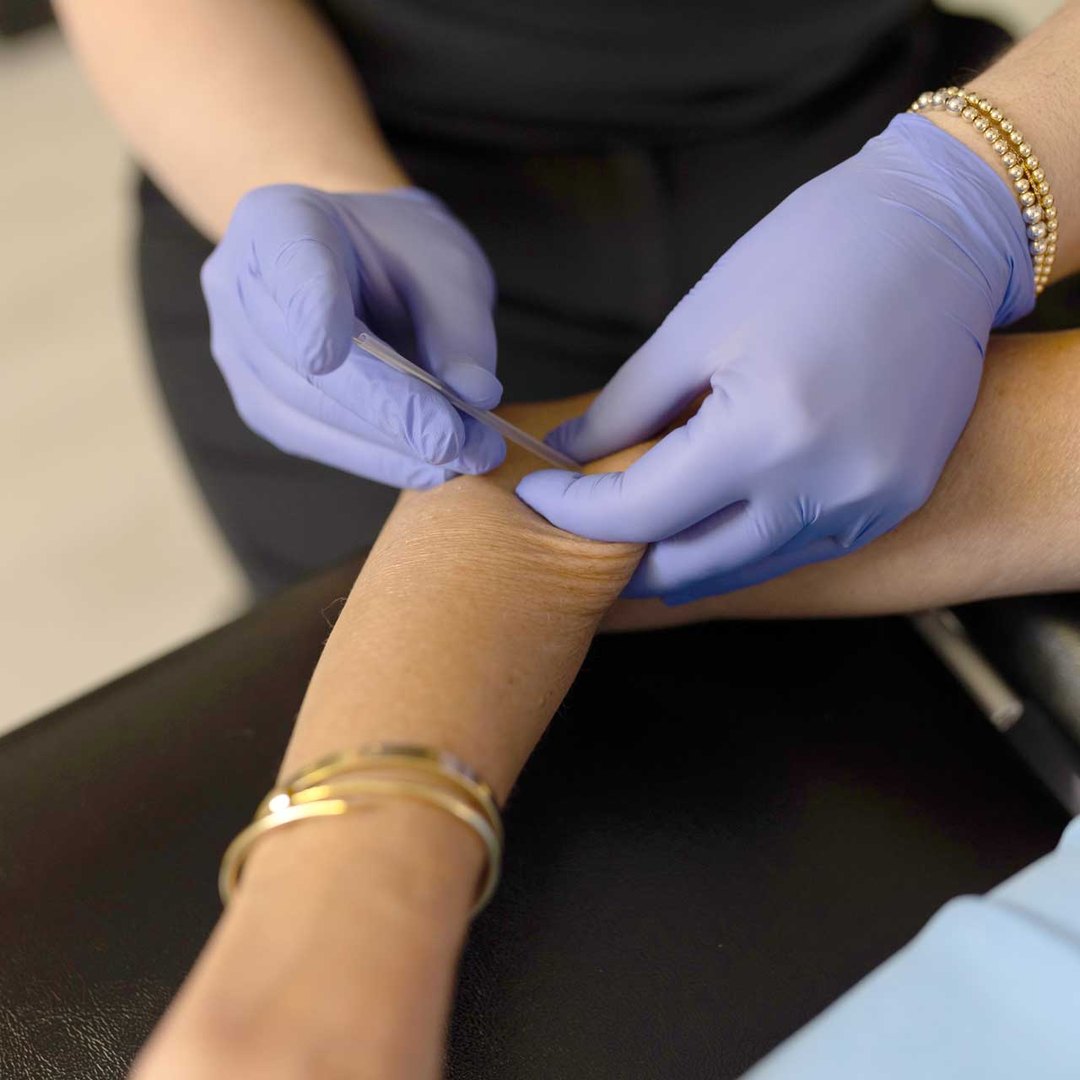
If you are dealing with persistent muscle pain, tightness, or a movement limitation that hasn’t responded to traditional treatment, you may have heard about dry needling.
You may also be wondering:
- Is dry needling the same as acupuncture?
- Why would a physical therapist put a needle somewhere that doesn’t hurt?
- What exactly is a muscle “trigger point”?
- What’s the difference between static and pistoning dry needling?
As orthopedic physical therapists, we use dry needling as one tool within a comprehensive rehabilitation program. Understanding what dry needling is, and what it isn’t, can help you make an informed decision about whether it may be appropriate for your condition.
Dry Needling vs. Acupuncture: What’s the Difference?
This is one of the most common questions patients ask.
Both treatments use thin, solid needles, but they are based on different clinical frameworks.
Acupuncture
Acupuncture traditionally originates from Traditional Chinese Medicine and uses specific acupuncture points as part of a broader system for influencing health and physiological function. Modern acupuncture may also incorporate contemporary approaches to pain management.
Dry Needling
Dry needling, as practiced within orthopedic physical therapy, generally uses a musculoskeletal and neurophysiological approach.
The physical therapist evaluates:
- Your symptoms
- Musculoskeletal anatomy
- Muscle sensitivity
- Movement patterns
- Strength and mobility
- Functional limitations
- Your response to examination and treatment
This evaluation determines the treatment location for dry needling. The needle is then used as one component of the treatment plan.
The important distinction isn’t simply the needle. It’s the clinical reasoning behind how and why the needle is used.
What Are Myofascial Trigger Points?
A myofascial trigger point is generally described as a sensitive area within a taut band of skeletal muscle that can reproduce a patient’s familiar pain when stimulated.
Trigger points can occur in muscles that have experienced repeated or excessive loading, sustained positions, or other forms of mechanical stress.
But there is another important characteristic:
A trigger point doesn’t always hurt where it is located.
This leads to the concept of referred pain.
What Is Referred Pain?
Referred pain occurs when stimulation of one structure produces pain or symptoms in another area of the body.
For example, a patient may feel pain in one region while examination of another muscle reproduces the patient’s familiar symptoms.
This can leave patients understandably confused:
“If my pain is here, why are you treating me somewhere else?”
The answer is that the location where you feel pain isn’t necessarily the only tissue contributing to your symptoms.
Research examining myofascial trigger points has demonstrated that stimulation of certain trigger points can reproduce pain beyond the immediate location of the muscle.
However, trigger points aren’t the only potential source of referred pain. Pain can also be referred from joints, nerves, muscles, and other tissues.
That’s why a comprehensive physical therapy evaluation is important.
Rather than simply treating the location that hurts, an orthopedic physical therapist asks:
“What structures could be contributing to this patient’s symptoms, and can I reproduce their familiar pain during the examination?”
Static vs. Pistoning Dry Needling
Once a therapist determines that dry needling may be appropriate, there are different techniques that can be used.
Two commonly discussed approaches are static needling and pistoning.
Static Dry Needling
With static dry needling, the therapist inserts the needle into the targeted tissue and leaves it relatively stationary for a period of time.
Patients may experience a brief prick, pressure, aching, or occasionally a sensation that travels into another area.
Pistoning Dry Needling
Pistoning, sometimes referred to as dynamic or “fast-in, fast-out” needling, involves repeatedly moving the needle within the targeted tissue.
One purpose of this approach may be to stimulate the muscle and, in some cases, produce a local twitch response.
A local twitch response is an involuntary contraction of a small portion of muscle. Patients may describe it as a brief jump, twitch, or cramping sensation.
Pistoning may create a more noticeable sensation than static needling.
Dry Needling Is a Tool, Not a Stand-Alone Solution
One of the most important things to understand about dry needling is that it isn’t intended to be a replacement for rehabilitation.
If a muscle is repeatedly becoming painful or overloaded, simply treating the muscle may not address why the problem developed in the first place.
Contributing factors may include:
- Strength deficits
- Poor load tolerance
- Training errors
- Limited mobility
- Altered movement mechanics
- Repetitive activity
- Previous injury
- Inadequate recovery
This is why dry needling is often incorporated into a broader rehabilitation program, alongside manual therapy and progressive strength training.
For example, a runner with hip pain may benefit from dry needling to help modify muscle sensitivity. But the rehabilitation program may also address hip strength, single-leg control, running mechanics, and progressive running volume.
Dry needling can help create an opportunity for better movement. Exercise and progressive loading help create lasting adaptation.
Is Dry Needling Right for You?
Dry needling isn’t appropriate for every patient or every condition.
The best way to determine whether it may be beneficial is through a comprehensive evaluation by a qualified healthcare professional.
At our orthopedic physical therapy practice, we don’t simply treat the area that hurts. We evaluate why you’re experiencing pain, how your body is moving, and what factors may be limiting your ability to perform.
When appropriate, dry needling can be incorporated into an individualized treatment plan alongside targeted exercise, strength training, mobility work, and movement rehabilitation.
Ready to Find the Source of Your Pain?
Don’t just treat where it hurts. Find out why it hurts.
Learn more about trigger point dry needling at One on One Physical Therapy, or schedule an evaluation to determine whether dry needling and a comprehensive rehabilitation program may be appropriate for you.
Jeffrey “Jeff” Savier, PT, DPT is a physical therapist at One on One Physical Therapy in Atlanta. He is a Certified Manual Trigger Point Therapist in Dry Needling and a Clinical Athlete Provider.
This article is the first in a series on dry needling. It is for general education and is not medical advice. Please discuss new or worsening symptoms with your healthcare team.