Why Sports Injuries Deserve Real Rehab, Starting Day One

Every athlete gets hurt eventually, from a middle schooler on a travel team to an adult in a weekend league. What happens in the days and weeks after the injury often matters more than the injury itself. Too many athletes rest until the pain fades, then jump back in. That approach is a common reason injuries linger, come back, or turn into something bigger.
Start the day of the injury
The old advice to “wait and see” costs athletes time. Early evaluation and treatment, ideally the same day, help control swelling, protect the injured tissue, and give you a clear picture of what you’re dealing with. Starting early also means the athlete is guided from the beginning instead of guessing, which reduces the chance of compensating in ways that create new problems.
This applies at every age. Young athletes are still growing and their bodies respond differently to stress, so they benefit from early, informed care. Adult athletes often have a history of prior injuries and tight or weak areas that shape how a new injury develops. Either way, sooner is better.
Treat the tissue, then find the cause
Early treatment focuses on the tissue that was injured: the muscle, tendon, ligament, or joint. But an injury rarely happens in a vacuum. A sprained ankle may point to limited hip strength or poor balance. A hamstring strain may trace back to trunk control or workload. A good rehab program starts addressing these contributing factors right away, not after the pain is gone. If you only treat the site of injury, you leave the reason it happened untouched.
Pain relief is only step one
Feeling better is not the same as being healed. Pain often improves long before the tissue has regained its capacity to handle sport. An athlete who stops at “it doesn’t hurt anymore” is usually still missing:
- Mobility: full, normal range of motion in the joint and surrounding areas
- Strength: in the injured area and in the muscles that support it
- Control and coordination: balance, movement patterns, and sport-specific skills
Skipping these leaves the athlete stiffer, weaker, and more vulnerable than before. Restoring them is what turns recovery into a return to actual performance.
Follow a guided program through the phases
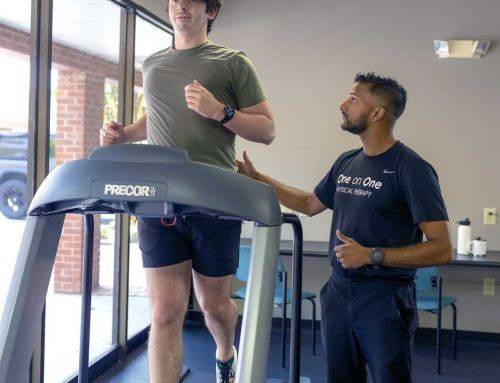
Rehab works best as a progression, not a random collection of exercises. A typical path moves through phases: protecting the injury and calming symptoms, restoring motion, rebuilding strength, then adding power, agility, and sport-specific movement. Each phase has its own goals, and the athlete moves forward when those goals are met, not when the calendar says so.
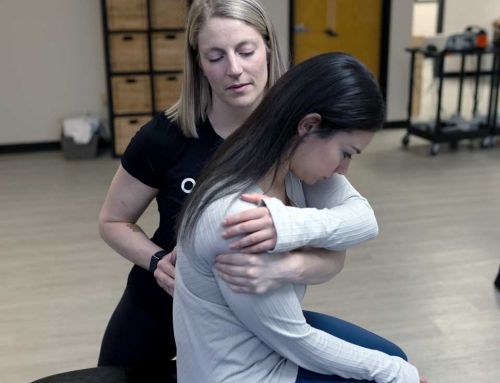
A guided program keeps that progression on track. A physical therapist can adjust the load as the athlete improves, catch problems early, and make sure no phase gets skipped just because the athlete feels ready.
Return to play is gradual, with clear criteria
The last step is often the most rushed. Returning to full competition should be gradual and can include limited participation, such as modified practices, controlled drills, or restricted minutes, before the athlete is fully cleared. Just as important, there should be criteria for full return: things like pain-free movement, comparable strength and motion to the uninjured side, and confidence performing sport-specific tasks. Objective benchmarks take the guesswork out of the decision and protect athletes from being cleared too early.
At One on One, we use VALD force plate and strength testing to compare the injured side with the uninjured side, so the decision to return is based on measurements, not just on how the athlete feels.
The bottom line
Rehabilitation isn’t optional extra credit after an injury. It’s how an athlete recovers fully, reduces the risk of re-injury, and returns to sport ready to perform. Start the day of the injury, treat the tissue and the causes, rebuild mobility and strength, follow the phases, and return gradually with clear criteria. If you or your athlete is dealing with an injury, don’t wait for it to go away on its own. Get evaluated and start the process early.
Karen Davis Warren, PT, MPT is the owner of One on One Physical Therapy in Atlanta and adjunct clinical faculty at Emory University.
This article is for general education and is not medical advice. Please discuss new or worsening symptoms with your healthcare team.